
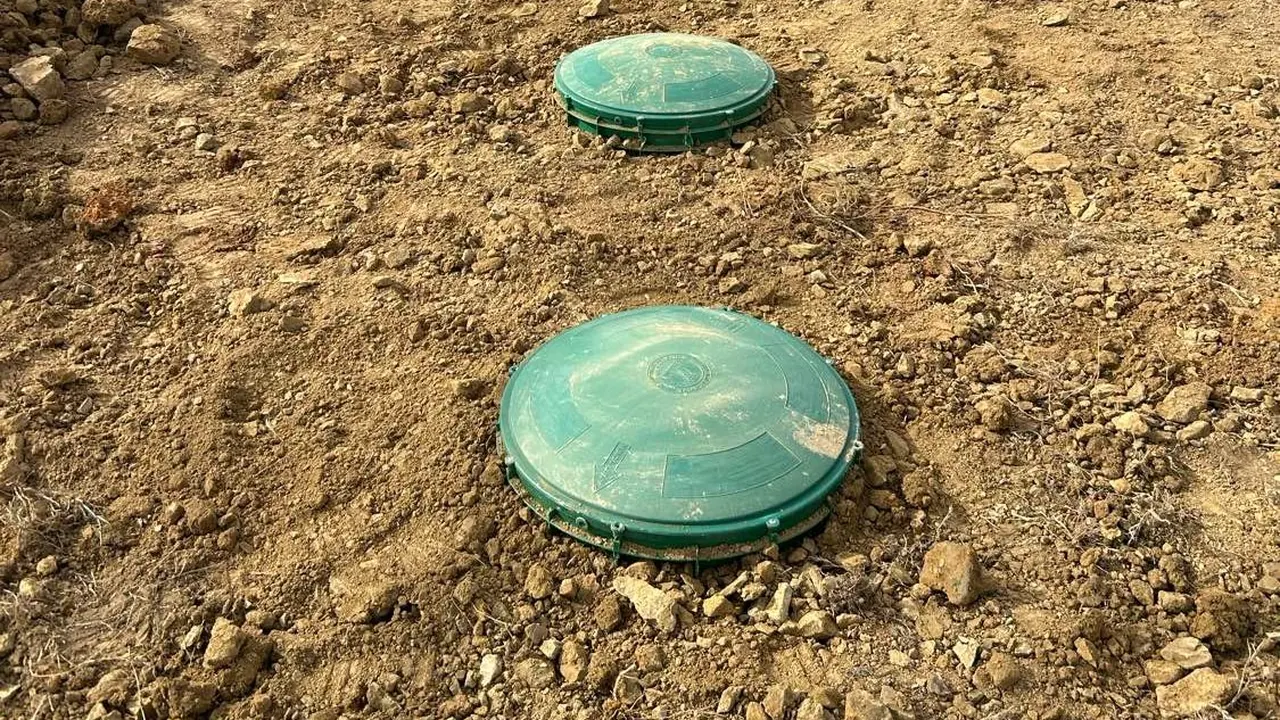
What Are the Signs of Failing Lateral Lines in Oklahoma?
Lateral lines are what Oklahoma calls the drain field, also known as a leach field or absorption field. The clearest signs they are failing show up in the yard. Look for wet ground or sewage over the lines, and a sewage smell near them.
Inside, drains run slow or back up, and heavy rain can make it worse. Grass over the lines that stays bright green in a dry spell is another sign. Some causes can be fixed with lateral line repair. Others call for a new field, which Oklahoma’s rules treat as a new installation.
What does a failing lateral field look like?
The U.S. Environmental Protection Agency (EPA) lists these warning signs of a failing septic system.
| Sign | What to look for |
|---|---|
| Wet ground | Standing water or soft, spongy soil over the lines |
| Surfacing sewage | Sewage or wastewater coming up in the yard |
| Odor | A sewage smell near the tank or the lateral lines |
| Green strips | Grass over the lines that stays bright green in dry weather |
| Slow drains | Tubs and sinks that drain slowly, or pipes that gurgle |
| Backups | Sewage coming back up into toilets or sinks |
Wet ground right after a storm can be ordinary runoff. The EPA calls soft, wet soil over the field a sign of failure when there has been no real rain. If the spots stay wet after the rest of the yard dries, look at the lateral lines.
Read green grass the same way. Oklahoma’s extension service says grass over the trenches can grow darker green, which shows where the lines run. A patch much greener than the rest of the yard during a drought is different. The extension service says that can mean blocked lines or a failed system.
Why do lateral lines fail in Oklahoma clay?
The Oklahoma Department of Environmental Quality (DEQ) describes lateral lines as a series of shallow trenches. Its homeowner guide says the system’s success depends on the soil’s ability to absorb water.
The USDA soil survey rates the major soils of Creek and Tulsa counties as very limited for septic lateral lines. Dennis and Okemah are common soils at Sapulpa and across Tulsa County. For both, the survey points to slow water movement and a wet layer near the surface.
Dennis shows how that plays out. Its typical profile turns to clay about 17 inches down. From December to April, it can hold a perched water table 12 to 30 inches below the surface.
Oklahoma’s rules set conventional trenches 18 to 30 inches deep, so in those months water can sit at trench level. NOAA’s 30-year averages for Tulsa also make spring the wettest season, and May the wettest month.
The extension service says clay’s small pores move water poorly. Wastewater can pond over the lines and break through the ground, which the extension service calls surfacing.
What else makes lateral lines fail?
- Solids from the tank. The DEQ guide says sludge and scum must be pumped out so they do not spill into the field. The EPA adds that skipped maintenance lets solids reach the field and clog it. Our guide on how often to pump a septic tank covers the timing.
- Too much water. An overloaded field can flood, the EPA says, and push sewage into the yard or back into the house. One running toilet can add as much as 200 gallons a day. The DEQ guide says to send roof and driveway runoff away from the field.
- Roots. Roots can clog or break the pipe, the DEQ guide warns. Keep trees and shrubs away from the field.
- Weight. The EPA says cars and heavy equipment compact the soil and can damage the pipes.
- Age. In a field past 25 to 30 years old, the EPA says the biomat can thicken. That natural layer forms in the trench bottoms, and a thick one slows how fast water soaks away.
Can lateral lines be repaired, or do you need a new field?
It depends on what failed. The extension service describes a running toilet that sent a field more water than it could handle. Water surfaced, but the field itself was fine, and the fix belonged in the house.
The DEQ’s troubleshooting guide also starts small, with fixing leaks and cutting water use. Then it moves to pumping the tank and replacing broken pipe. Trouble at the tank or in a failed part falls under septic system repair.
Oklahoma’s rules draw a clear line. A repair fixes a part, or replaces it in the exact same spot. Digging out and replacing a lateral trench is not a repair under the rule. Replacing the field counts as a new installation, even when the old tank stays.
National cost guides put these market ranges on the work. These are market numbers, not our price list. One guide says size, slope, soil and access move the price.
| Job | Market range from national cost guides |
|---|---|
| Repairing lateral lines | $1,000 to $5,000 in one guide; $2,000 to $15,000 in another |
| Replacing the lateral field | $3,000 to $15,000 in one guide; about $7,000 on average in another |
| A new tank and lateral field together | $4,500 to $20,000 in one guide; $5,000 to $12,000 in another |
What does the DEQ process look like for a new lateral field?
As a new installation, a replacement field goes through the DEQ’s three steps.
- The soil test and the 581 report. At least three holes or pits are dug where the new lines would go. The report sets which systems the lot allows and the field’s minimum size.
- The Authorization to Construct. The DEQ must issue it before the new field goes in. The local DEQ environmental specialist reviews the soil report first.
- The inspection. The new field must be inspected and approved before it is covered or put to use. The final inspection form records where each part sits on the lot.
The soil test can change the plan. Under the rules, a conventional field is not allowed in Group 5 soil, the heaviest clay. An aerobic system with spray heads is allowed in every soil group. The local DEQ office answers questions about a specific lot.
What should you do when you see the signs?
Oklahoma’s rules say sewage must not surface or pool on the ground. When a system malfunctions, the owner must act promptly to repair it.
- Cut water use. Spread laundry over the week, and fix any running toilet.
- Keep people and pets away from wet spots. If sewage backs up into the house, the EPA says to avoid touching it.
- Find the system’s original inspection report, which should show where the tank and lines sit. The local DEQ office has copies, the DEQ guide says.
- Skip septic additives. The DEQ guide does not recommend them, and the extension service says they may shorten a field’s life.
Buying a home on septic? A septic inspection checks the tank and the lateral lines before you close.
Who repairs lateral lines around Sapulpa?
Eastern Oklahoma Septic Services is based in Sapulpa and works on lateral lines across the Tulsa area. Our crew finds the problem on site, then repairs the lines or puts in a new field. Learn more about repairing and replacing lateral lines, or call or text (918) 645-0557. We look at the job and put the quote in writing.