
How Much Does Septic Tank Pumping Cost in Oklahoma?
One national cost guide puts septic tank pumping at $255 to $600, and most homeowners pay around $400. A second national guide, updated in May 2026, puts the average at $420. Its usual range runs from $290 to $560. The EPA puts regular septic maintenance at $250 to $500 every three to five years.
These are market numbers, not our price list, and neither guide prints an Oklahoma price. Eastern Oklahoma Septic Services offers septic tank pumping for conventional tanks and the tanks on aerobic systems. We work around Sapulpa and the Tulsa area. We look at the job and put the quote in writing.
What does septic tank pumping cost by tank size?
Tank size sets the base price. Larger tanks hold more waste and cost more to pump, and both guides print the same ranges by size.
| Tank size | Published pumping cost |
|---|---|
| 750 gallons | $175 to $300 |
| 1,000 gallons | $225 to $400 |
| 1,250 gallons | $275 to $500 |
| 1,500 gallons | $345 to $600 |
| 1,750 gallons | $400 to $700 |
The 2026 guide says single-family homes typically use a 1,000 or 1,250 gallon tank. Oklahoma’s septic rule calls for at least 1,000 gallons on a home with four or fewer bedrooms. Each bedroom past four adds 250 gallons, so a five-bedroom home needs at least 1,250.
Not sure what size your tank is? The state rule calls for a concrete tank to carry a data plate on a manhole riser lid. The plate lists the tank’s liquid capacity.
What moves the price of pumping a septic tank in Oklahoma?
The base price is only part of the bill. The 2026 guide lists these extras.
| What adds to the bill | Published range |
|---|---|
| Buried lid, landscaping or frozen ground in the way | $50 to $200 more |
| Overdue tank with thick sludge | $100 to $300 more |
| Weekend or after-hours call | 50 to 100 percent above standard rates |
| New tank baffles | $300 to $500 |
| Tank riser for access | $300 to $1,000 |
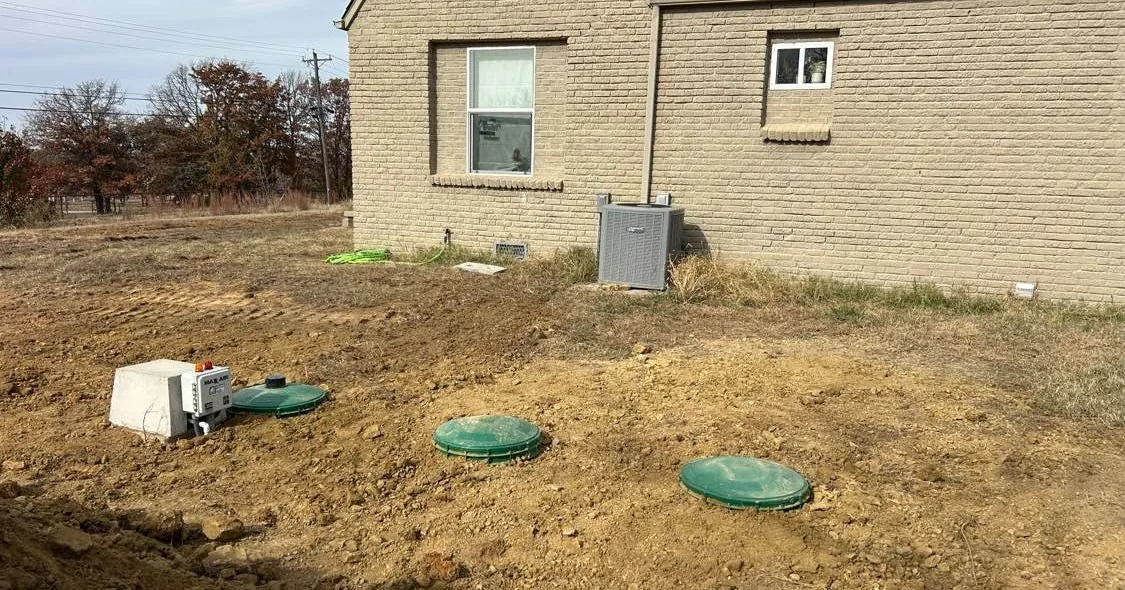
- How deep the lid is. The pumper has to reach the lid first, and the guide says some tanks need extra digging. Oklahoma’s septic rule calls for a tank’s inlet and outlet cleanouts to reach at least 2 inches above the ground. If your lids sit under the grass, ask about a riser.
- A conventional tank or an aerobic system. An aerobic system starts with a trash tank, where solids settle out. The water then gets treated in an aeration tank. The guide says basic gravity systems typically cost less to service than aerobic setups with multiple chambers. Our aerobic septic system maintenance visits check the aerator and the spray heads.
- How overdue the tank is. Skipped pumpings let the waste layers harden, and thick sludge takes more work to remove. The guide says sticking to a pumping schedule can help you prevent that charge.
- Distance and disposal. The first guide says rural pumping may cost as little as $200, while high-cost cities can top $800. The 2026 guide says labor costs, disposal fees and service availability make prices vary by location. Farther from Sapulpa, travel time is part of the quote.
- A weekend or after-hours call. Last-minute calls cost more than planned visits, the 2026 guide says. It adds that regular maintenance usually helps you avoid those charges.
What if the pumping turns up a broken baffle or a lateral line problem?
While the tank is open, we check it and its baffles, then tell you what we see. Baffles hold the sludge and scum in the tank. The EPA says the tank’s T-shaped outlet keeps them from leaving the tank. The 2026 guide lists new tank baffles at $300 to $500.
Some trouble sits past the tank, out in the lateral lines, also called the drain field. Our guide to the signs of failing lateral lines covers what to watch for. The crew finds the cause on site. A septic system repair or lateral line repair gets its own written quote before the work starts.
For scale, the EPA says repairing or replacing a malfunctioning conventional system can cost $5,000 to $15,000. If you want the whole system looked over, ask about a septic inspection. The 2026 guide puts system checks at $250 to $1,180 every three years.
Why does Oklahoma require a license to pump septic tanks?
DEQ says most rural homes and businesses in Oklahoma are not served by public sewer. It says periodic pumping keeps those septic systems working over the long term. State law requires a license for anyone in the business of pumping, hauling or disposing of septage. Septage is the waste pumped from those tanks.
The pumping and the disposal both have to follow DEQ’s rules for pumpers and haulers. The license is renewed each year. DEQ’s homeowner guide says a contractor with a DEQ license should pump the tank and dispose of the contents.
How often should you pump a septic tank in Oklahoma?
Under average conditions, the DEQ guide says to pump every three to five years. The EPA says household tanks are typically pumped every three to five years. Its trigger is when more than 25 percent of the liquid depth is sludge and scum.
Your own interval turns on your household and your tank. Our guide on how often to pump a septic tank has the full schedule by tank size and household size.
How can you go longer between pumpings?
Fewer pumpings mean fewer bills. These habits come from DEQ’s homeowner guide unless noted.
- Go easy on the garbage disposal. With a disposal, DEQ says to size the tank 20 percent larger and pump every one to two years.
- Keep trash out of the tank. DEQ’s do-not-flush list includes paper towels, cat litter, grease, cooking oil and coffee grounds.
- Spread out the laundry. Run loads over several days instead of many loads in one day.
- Fix leaks. The 2026 cost guide says fixing leaks and installing efficient fixtures can stretch the time between pump-outs.
- Skip the additives. DEQ says septic tank additives are not recommended. It says to have all contents removed, since incoming sewage brings the bacteria the tank needs. The tank needs no scrubbing or disinfecting after pumping.
How do you get a real price for pumping your tank?
National ranges help you plan, but your own tank sets the real number. Its size and how easy the lids are to reach both play a part. Our septic tank pumping page covers what we check while the tank is open. Call or text (918) 645-0557, and we look at the job and put the quote in writing.